


Indicadores
| Título del ítem | Sumario | Categorías | Creado | |
|---|---|---|---|---|
| Tetra Pak lance une recherche inédite sur lemballage alimentaire à base de fibres | 
Cette recherche vise à découvrir de nouvelles perspectives sur la nanostructure des matériaux en fibres, avec une première application pour optimiser la composition des matériaux utilisés pour les pailles en papier. Tetra Pak vient d’entamer des recherches révolutionnaires visant à faire progresser un emballage alimentaire plus durable à base defibres, en collaboration avec MAX IV, le laboratoire de rayonnement synchrotron nouvelle génération. Cette recherche vise à découvrir de nouvelles perspectives sur la nanostructure des matériaux en fibres, avec une première application pour optimiser la composition des matériaux utilisés pour les pailles en papier. Il s’agit de la toute première expérience de recherche et développement industrielle menée à ForMAX, une nouvelle station de recherche consacrée à l’étude des matériaux issus de la forêt, située au laboratoire MAX IV à Lund, en Suède. Alors que la demande mondiale en matière de sécurité alimentaire et de nutrition s’intensifie et que les matières premières se raréfient, les recherches de solutions d’emballage plus durables, qui utilisent moins de ressources rares se multiplient. Les nouveaux matériaux à base de papier vont offrir de nouvelles possibilités, mais doivent rester sûrs pour les aliments, recyclables, plus résistants aux liquides et à l’humidité, tout en répondant aux exigences accrues en matière de durabilité. De nouvelles perspectives sur les matériaux à base de plantes« Une compréhension fondamentale de la structure et des propriétés des matériaux est cruciale alors que nous travaillons au développement de l’emballage du futur. Notre ambition est de fournir l’emballage alimentaire le plus durable au monde, et les expériences menées à ForMAX nous aideront clairement dans cette mission. L’emballage du futur doit être entièrement recyclable et avoir un faible impact environnemental. L’utilisation de matériaux renouvelables et l’augmentation de l’utilisation de matériaux à base de fibres dans les emballages seront essentielles. Avec cette recherche, Tetra Pak contribue à découvrir de nouvelles perspectives sur les matériaux à base de plantes, qui serviront de base aux innovations futures, » explique Eva Gustavsson, vice-présidente de la division Matériaux et emballages de Tetra Pak. « Notre première expérience, qui commence avec des pailles en papier, fournit des capacités d’analyse supplémentaires sur la façon dont le matériau de la paille en papier réagit aux changements de l’environnement en temps réel, ainsi que sur la façon dont la paille interagit avec différents types de liquides dans des conditions rigoureuses. Ces nouvelles perspectives et connaissances seront appliquées au développement des pailles en papier du futur dans nos outils de modélisation virtuelle, ce qui nous aidera à améliorer leur fonctionnalité, » conclut Eskil Andreasson, spécialiste en technologie, modélisation virtuelle, Tetra Pak. |
Francia | Envases y etiquetado | Intersectorial | Martes, 07 Marzo 2023 | |
| Womens health among top health and nutrition trends in 2023 |  It also said that affordable nutrition and sugar and salt reduction among some of the top areas for innovation in 2023. Kerry said that trends are underpinned by a desire for sustainable nutrition with consumers becoming more interested in proactively managing their physical and mental health while seeking products that are affordable, healthy and good for the planet. “Sustainability continues to be the leading driver in food and beverage innovation, as consumers become increasingly focused on health and affordability in their nutritional spend. The Kerry Health and Nutrition Institute’s research finds 2023 will see long-standing trends of health and sustainability take more personalised approach to specific consumer groups and need-states. Nutritional innovation is increasingly enabling consumers to proactively manage their physical and mental health including through functional beverages; sex-specific nutrition; and probiotics for more than digestive health," said Nathan Pratt, senior nutrition scientist at Kerry. “We are also seeing consumers placing increased importance on the nutritional density of their foods, as they seek affordable yet healthy alternatives in today’s macroenvironment. The industry must consider all of these trends in the context of feeding a growing global population – a task to which food science and technology will be critically important in the coming year and beyond.” The top 10 trends for 2023Functionality flourishingFunctional beverages are leading an industry-wide boom in products aimed to help consumers proactively manage their health. In 2023, KHNI predicts there will be a focus on short-term need states of beauty; immune support; digestive health; energy; and weight management. Women’s healthWomen’s health issues are being increasingly addressed via nutrition with broadening clinical research, delivering innovative supplement launches to support women’s digestive, heart, cognitive, bone, joint and immune health, KHNI said. These also support female specific need states such as fertility, breastfeeding and menopause. Advanced activityIt is predicted that there will be more products focusing on joint and cardiovascular health with these benefits targeting all active age groups. Cognitive healthThere will continue to be an increased focus on mental wellbeing post-Covid and growing science on the role of ingredients such as adaptogens and nootropics in brain health is seeing cognitive health carve a strong foothold in the food and beverage space. High stakes for sugar and saltChanges in nutrition and labelling legislation are becoming more widespread, and consumers are becoming more health conscience. Front-of-pack signposting is increasing to make healthier choices more simple but is also driving the increasing need for innovative technology to help manufacturers create healthier, more sustainable products, that deliver on taste and experience. Affordable nutritionFood innovation is not only focused on premium novel ingredients, but also on how we can make the food system more economically sustainable by maximising the nutritional density and affordability of foods. Protein production’s futureKNHI said that it would be “nearly impossible” to feed the planet’s population growth using the current systems of food production. Food science and technology will be critically important to innovate alternative means of producing the protein required to feed the planet. Microbiome – beyond digestive healthMicrobes extend far beyond the gut or digestive tract, and microbiologists are identifying more and more bacteria with interesting properties. The microbiome has been linked to a multitude of health benefits beyond digestive health including reproductive and cardiometabolic health, alongside immunity. Hydration optimisedHydration is moving beyond plain water, as consumers look for more exciting options such as sparkling water or electrolyte powers. KNHI said there isalso a move away from sweetness in hydration, with sparkling waters and low-sweetness options are being chosen more commonly by consumers looking to hydrate and manage weight. Plant-based to plant-forwardConsumers are increasingly looking beyond meat mimicry to plant-forward products as they challenge the heavily processed nature of plant proteins, Kerry highlighted. Plant-forward innovations that offer servings of fruits, vegetables, or whole-grains can help bridge gaps in our day-to-day diets while differentiating themselves in the plant-based market. |
Reino Unido | Mercados | Clientes | Intersectorial | Martes, 07 Marzo 2023 | |
| The Future of Automation in the Food Industry | By Buffy Hagerman, Marketing Communications Manager at Key Technology The food industry will always be inextricable from our ever-changing health and economic environments, and recent challenges in these areas have brought automation to the forefront. Automation in the food industry has historically been quite challenging — and remains so — due to the need to handle a broad range of nonuniform products while meeting the necessary stringent safety standards. Large food companies are, however, increasingly proving effective, efficient food automation to be possible and are reaping the rewards. Read on to learn more about the current face of automation in the food industry and what it means for production, efficiency, and safety. Applications of automation in the food industryAutomation in the food industry takes many forms. These include: Robotics: Robots are a fundamental underpinning of automation, and today’s food industry robots feature advanced technology that ensures they will remain a key part of the future of automation. Robots can nearly replicate human grabbing and multiaxis movement, yielding massive benefits in harsh environments (such as freezers) as well as lights-out processes. Robots, often in collaboration with human workers, continue to fulfill a vast array of duties on the production line, as well as in picking, sorting, and fulfillment. Integrated conveyor and sorting systems are among the most efficient uses of automation in facilities today. Artificial Intelligence (AI): AI technology is used in several areas in food manufacturing, including visual inspection of livestock and food products for safety and proper handling, as well as indication on the facility floor of whether personnel are carrying out proper safety measures, including proper hygiene, gowning, and handling procedures. Packaging: With today’s advanced automation, even traditionally difficult-to-handle food products such as meat and poultry can be effectively prepared and packaged through automated processes. Automated equipment can dismantle (rather than cut) meat from the bone and accurately package product in the volume necessary — all with little to no hands-on intervention from workers. Drones: Drones play a key role in the farming and agricultural component of food manufacturing, aiding in seeding, planting, fertilizing and applying pesticide, as well as visual inspection of planting areas and other parts of agricultural facilities.
Benefits of automation in the food industryThe automation applications described above are yielding immense benefits. These include: Cost: Automation creates efficiency, which in turn creates cost savings. By enabling facilities to carry out processes in a more productive fashion — increasing speed and throughput — automation can reduce overall production costs while increasing output. New automation infrastructure often requires a significant upfront investment, but this investment will pay itself back in a predictable manner, yielding cost benefits once the break-even point passes. Speed: Production speed is a part of increased productivity and efficiency, but still merits its own mention. Faster production means a better adherence to deadlines, closer adherence to customer requirements, and overall increased customer satisfaction, which can create major business benefits in the long term. While increasing the speed of processes, automation can also free up personnel to carry out higher-value tasks that cannot be completed by machines, further increasing the return on your investment. Safety: Food manufacturing poses numerous risks to workers, including extreme hot and cold environments, exposure to dangerous equipment (for example, cutting and slicing equipment) and concerns about proper food handling (for both employees and end customers). Automation attenuates these risks by using robots and other equipment to carry out the most dangerous processes, while taking workers out of the harsh environments that can pose the greatest risk and discomfort. Handling by automation equipment also vastly reduces the risk of cross-contamination. Resiliency: As mentioned, automation in the food industry has traditionally been considered too difficult to be worth the effort. In today’s food manufacturing landscape, however, automation has enabled continuity and safety in the facility on an unparalleled level, especially in the face of nearly unprecedented demand. Automation is poised to continue expanding and improving now that the benefits are becoming fully realized. These applications and benefits give you the foundation you need to understand the role of automation in food manufacturing today. Buffy Hagerman is Marketing Communications Manager at Key Technology, a leading food processing equipment manufacturer. Hagerman is responsible for marketing initiatives that build awareness of the company’s high-performance digital sorting, conveying and process automation solutions worldwide. |
Mundial | Intersectorial | Producción | Lunes, 06 Marzo 2023 | |
| Eating habits are changing with food prices a ‘top concern for consumers |  The findings come from a biannual ‘Food and You 2’ survey conducted by the Food Standards Agency (FSA) and suggest consumer concerns around cost-of-living and food insecurity. A total of 6,770 adults from 4,727 households across England, Wales, and Northern Ireland were surveyed between 26 April and 24 July 2022. The survey revealed most respondents had made changes to their eating habits in the last 12 months. The most common changes related to what and where respondents ate, reducing food costs and increased food management behaviours. Changes included eating out less and consuming fewer takeaways; cooking and eating at home more; buying items on special offer more; and changing what and where they buy to cheaper alternatives. For the most part, respondents said they changed eating habits due to financial reasons (69%). Overall, the top concern for people was revealed to be food prices (66%), followed by food waste (60%) and the amount of sugar in food (59%). Food insecurity was also a major focus on the survey, which indicated that 20% of households across England, Wales and Northern Ireland now have limited or uncertain access to adequate food. “This is the highest reported level of food insecurity since tracking began in 2020,” noted the FSA. Unsurprisingly, food security was associated with household income: respondents with a lower income were more likely to report being food insecure that those with a higher income. The survey also assessed use of food banks and free school meals. Most respondents (95%) reported they had not used a food bank or other emergency food provider in the last year, 3% said they had. Of respondents with children aged 7-15 years in their household, most (74%) said their children do not receive school meals. Approximately one in four (24%) said they do. |
Reino Unido | Clientes | Mercados | Intersectorial | Lunes, 06 Marzo 2023 | |
| USDA proposes new ‘Product of USA label requirements |  The U.S. Department of Agriculture released a proposed rule outlining new requirements that better align the voluntary “Product of USA” label with consumers’ interpretation of the claim. The proposed rule allows the voluntary “Product of USA” or “Made in the USA” label claim to be used on meat, poultry and egg products only when they are derived from animals born, raised, slaughtered and processed in the U.S. USDA says the increased clarity and transparency provided by this change would prevent consumer confusion and help ensure that consumers understand where their food comes from. “American consumers expect that when they buy a meat product at the grocery store, the claims they see on the label mean what they say,” says Agriculture Secretary Tom Vilsack. “These proposed changes are intended to provide consumers with accurate information to make informed purchasing decisions.” BackgroundUnder current regulations, imported beef can be brought into the U.S., undergo a "significant transformation," which can be as insignificant as trimming or rewrapping, and then claim the "Product of the U.S.A." label. Numerous cattle industry groups filed petitions to make the legal case for the USDA to stop allowing imported meat to use a “Product of U.S.A.” label. In July 2021, USDA initiated a comprehensive review to understand what the “Product of USA” claim means to consumers and define the requirements for making the claim. As part of its review, USDA commissioned a nationwide consumer survey. The survey revealed that the current “Product of USA” labeling claim is misleading to the majority of consumers surveyed, with a significant portion believing the claim means that the product was made from animals born, raised, slaughtered and processed in the U.S. USDA’s comprehensive review shows there is a clear need to revise the current “Product of USA” label claim so that it more accurately conveys U.S. origin information. ‘Product of USA’ rule changesUnder the proposed rule, the label claim would continue to be voluntary. It would also remain eligible for generic label approval, meaning it would not need to be pre-approved by USDA’s Food Safety and Inspection Service before it could be used on regulated product, but would require supporting documentation to be on file for agency inspection personnel to verify. The rulemaking also proposes to allow other voluntary U.S. origin claims on meat, poultry and egg products sold in the marketplace. These claims would need to include a description on the package of all preparation and processing steps that occurred in the United States upon which the claim is made. Cattle groups respond to USDA actionThe U.S. Cattlemen’s Association thanks the Biden Administration for finally closing the loophole that allows meat from other countries to be labeled “Product of the USA.” The group plans to submit comments supporting this proposed definition. “If it says ‘Made in the USA,’ then it should be from cattle that have only known USA soil,” says USCA president Justin Tupper. “Consumers have the right to know where their food comes from, full stop.” “Truthful labels protect consumers and keep the playing field fair,” says Joe Maxwell, president and co-founder of Farm Action. “After a five-year fight, we’re pleased to see the USDA stepping up to stop the cheaters picking the pockets of America’s farmers and ranchers.” However, the National Cattlemen’s Beef Association says more needs to be done to protect U.S. cattle producers. "Simply adding born, raised, and harvested requirements to an already broken label will fail to deliver additional value to cattle producers and it will undercut true voluntary, market-driven labels that benefit cattle producers,” says Kent Bacus, NCBA executive director of government affairs. “We cannot afford to replace one flawed government label with another flawed government label." “We will continue working to find a voluntary, trade-compliant solution that promotes product differentiation and delivers profitable solutions and for U.S. cattle producers,” Bacus adds. USDA’s proposed rulemaking is supported by petitions, thousands of comments from stakeholders, and data. USDA encourages stakeholders to comment on the proposed rule, which will be open for public comment for 60 days after publishing in the Federal Register. |
EEUU | Mercados | Envases y etiquetado | Legislación y normativa | Intersectorial | Lunes, 06 Marzo 2023 | |
| Las empresas españolas muestran cautela frente al proteccionismo de EEUU | Este estudio tiene el objetivo de analizar el desempeño y las oportunidades de negocio de las empresas españolas en el país norteamericano para proporcionar una perspectiva de cuáles son los retos a los que se enfrentan nuestras compañías en un mercado considerado prioritario, en este contexto marcado por la recuperación post-pandemia, la guerra en Ucrania, la volatilidad del mercado energético, la inflación y el proteccionismo. Este informe se ha realizado mediante una encuesta realizada a 143 empresas españolas que operan allí (130) o tienen interés en hacerlo (12), a través de la opinión de una serie de expertos en dicho mercado, y de los testimonios de algunas multinacionales españolas que llevan años de trayectoria en este país como Acesur, ADEX, CAF, Cosentino, GMV, Mapfre, Santander y SENER. De los resultados de la encuesta se desprende que el 55% de las empresas de la muestra manifiesta que en 2022 han recuperado el nivel de negocio previo a la pandemia, un 33% señala que 2023 será el año en que volverán a los niveles de antes de la crisis sanitaria y solo un 12% considera que la recuperación se producirá de 2024 en adelante, siendo esta recuperación de los niveles de facturación más acusada para las empresas más consolidadas en dicho mercado. Aproximadamente un 30% de las empresas encuestadas manifiestan que la política comercial proteccionista aplicada por EEUU ha tenido impacto en sus exportaciones a dicho país, un 36% de las empresas del sector industrial reconocen que este tipo de medidas ha tenido un impacto importante o muy importante en su estrategia, y solo un 5% de la muestra de empresas manifiestan haberse visto afectadas por la reforma del NAFTA. Respecto a este tipo de medidas, más de la mitad (53,5%) señala que puede tener un impacto moderado e incluso el 22% considera que puede tener un impacto importante o muy importante. Por sectores, el industrial considera con casi un tercio (31%) de los encuestados que las medidas proteccionistas tendrán bastante o mucha importancia para abrir nuevas oportunidades en Estados Unidos.
Cuáles son las motivaciones, retos y fortalezas Para el 78% de las empresas, la facturación que obtienen en este mercado es un factor importante o muy importante en su decisión de operar en este país. Otros aspectos como la imagen y el prestigio (80%) o las posibilidades de contactos con socios son igualmente muy valorados (78%). Para las empresas de los sectores industriales, el factor innovación y tecnología es señalado y percibido también como muy importante. Las empresas españolas identifican una serie de retos de cara al futuro, siendo e más importante la entrada de nuevos competidores. Así, el 45,9% considera que la entrada de nuevos competidores será el reto mayor al que se enfrentan, seguido de los cambios regulatorios (34,3%). Como fortalezas, las compañías señalan la calidad (63%) de los productos ofrecidos, la imagen y el prestigio de marca (71%) y el precio competitivo (67%). Las alianzas con otros socios son consideradas como un factor de éxito por más del 80% de las compañías. En términos generales una proporción muy elevada de empresas considera que los factores más importantes para el éxito en Estados Unidos son la calidad de productos y servicios y las alianzas con otros socios. El origen español es mencionado por un 61% como una fortaleza, mientras que para otros 39% esta procedencia representa una debilidad que resta valor. Por sectores, es el de alimentación y bebidas donde se aprecia más la marca España (76%) pero este porcentaje baja al 50% en el sector industrial. Dados los retos que afronta la empresa española en EEUU, las compañías consideran en un 62% que es muy importante la identificación de oportunidades de negocio. También lo son la identificación de socios y la promoción de la marca España, ya que más del 40% de las empresas necesitarían apoyo en estos dos ámbitos. |
EEUU | Mercados | Intersectorial | Lunes, 06 Marzo 2023 | |
| Using Social Media Influencers? Consumers Want You to Keep It Real | Portrait of beautiful young woman holding fresh batter and smiling at camera while filming baking tutorial for video channel, copy space More than half (59%) of consumers are interested in seeing influencer content about food and beverage products, and 52% say this type of content prompts them to act (e.g., purchase). But, they want authentic content from relatable personalities, rather than celebrities. These data come from Matter Communications, who surveyed more than 1,000 consumers about their social media consumption, influencer perceptions, and purchase habits in the past year. Other key takeaways: 81% of consumers have either researched or considered purchasing a product or service after seeing friends, family, or influencers post about it. 69% trust recommendations from friends, family, or influencers over information directly from brands. Consumers are most likely to follow relatable (61%) and expert (43%) influencers. Only 11% prefer celebrity influencers. Food and beverage is the top category where consumers want to see influencer content. Their favorite types of content are how-to content (e.g., recipes, 42%), stories with short bits of information with video and/or photos (35%), and photo- or image-based posts with information in captions (33%). YouTube is the platform where consumers say they find the most authentic/beneficial influencer content. |
EEUU | Mercados | Clientes | Intersectorial | Domingo, 05 Marzo 2023 | |
| Consumers continue to change eating habits but food insecurity rising |  Its survey - Food and You 2 Wave 5 - showed that the most common changes people have made to their eating habits include eating out less and eating fewer takeaways; cooking and eating at home more; buying items on special offer more; and changing what and where they buy to cheaper alternatives. The main causes of reported changes in eating habits were financial reasons (69%), health reasons (47%), and because of COVID-19 and lockdown (41%). Food pricesThe research also revealed that food prices were the top concern for people (66%), with food waste (60%) and the amount of sugar in food (59%) also featuring in the top three prompted concerns. Latest figures from this survey indicated that 20% of households across England, Wales and Northern Ireland are now food insecure, meaning they have limited or uncertain access to adequate food. This is the highest reported level of food insecurity since tracking began in 2020. However, around three quarters of respondents (74%) reported that they had confidence in the food supply chain. Eating habitsEmily Miles, chief executive at the FSA, said: “Food and You 2 provides FSA and the rest of Government with robust data on what people think and do when it comes to food. We are seeing high levels of concern about food prices, as well as people making changes to their eating habits for financial reasons.” She added: “The experiences people are reporting to us are critically relevant to the FSA's work as a regulator, and to our mission to make sure people have food they can trust. The FSA will continue to play our part in protecting health and consumers’ wider interests in relation to food.” Fieldwork for Food and You 2 Wave 5 was conducted between 26 April and 24 July 2022. A total of 6,770 adults from 4,727 households across England, Wales, and Northern Ireland took part. |
Reino Unido | Mercados | Clientes | Intersectorial | Domingo, 05 Marzo 2023 | |
| Boost your brand image with environmentally friendly packaging | Favourite Packaging has released recyclable packaging without PET layering which owners says provides equivalent protection to traditional packaging. Adam McCleery writes. As 2025 sustainability and efficiency targets get ever closer, the move towards sustainable packaging continues to intensify with companies like Favourite Packaging helping to innovate new and recyclable packaging. One of the largest challenges for recyclable food packaging centres around the shelf life of the product, where traditionally non-recyclable PET layering provides the standard protection needed. Favourite Packaging, a company that specialises in food, pet food, and industrial packaging, recently released new recyclable packaging options which managing director Justin Yates said finally provides equivalent protection. “We started the company in the 1980s and we have been both a manufacturer and importer of flexible packaging products ever since,” said Yates. Favourite Packaging’s recyclable packaging products promise product integrity, longevity, quality, and a bold look that stands out on a shelf. “But anything that needs a shelf-life with a good oxygen barrier is usually a laminated product that contains PET.” “We also have a new innovative line of pallet stretch wrap that reduces the amount of plastic being used on every pallet. We also have a version that is made from recycled content. “We are aiming to try and move whatever isn’t already classified as recyclable into that area.” Knowing that packaging requirements would undergo continued changes, the team at Favourite Packaging continued to innovate to future proof its industry offerings. “To find materials that are mono structured and easily recyclable while also performing as well or better has been a big process. As the push to 2025 comes that has become better, in the last two years and after lots of work we have got something that is equivalent to a PET barrier and recyclable.” The push towards more recyclable packaging has also been driven by the end user, in this case food manufacturers, and consumers. “It has been a bit of a pull effect with end users now wanting this material. It has forced manufacturers to really ramp up their research and development,” said Yates. “Now that there is such a call for it there’s a lot of money going into research and trialling these new materials, and without the national targets it might have stumbled along for a long time.” Yates’ comments are also founded on research which shows that significant portions of consumers are making purchasing decisions based on ethical and environmentally friendly packaging. Favourite Packaging has had to keep up with the changing demands of consumers and end users to remain successful, and its six-step packaging solution process perfectly adapts to changes in the market. Because each packaging solution is unique to each user, Favourite Packaging ensure a close working partnership with clients to bring the best suited solution. An excellent example of this is the company’s recyclable pouches, which are a key area of focus for Favourite Packaging. For a pouch to be considered recyclable it must be produced using an approved single material structure, a mono type of plastic. Consumers can discard these pouches through recycling, where they can be collected and enter a waste management flow to be reborn as raw material for a different application, thus contributing to the circular economy. By changing to these recyclable pouches, the carbon footprint of your package can be reduced around 60 per cent. Favourite Packaging has the capacity to customise the recyclable pouch into all styles, including stand up and flat bottom and also offer both regular and high barrier versions. The pouches are a clear example of how an end user can have a packaging product which is recyclable, durable, and resealable. All of which are recognised as environmentally responsible while meeting the rising demands of end users and consumers. 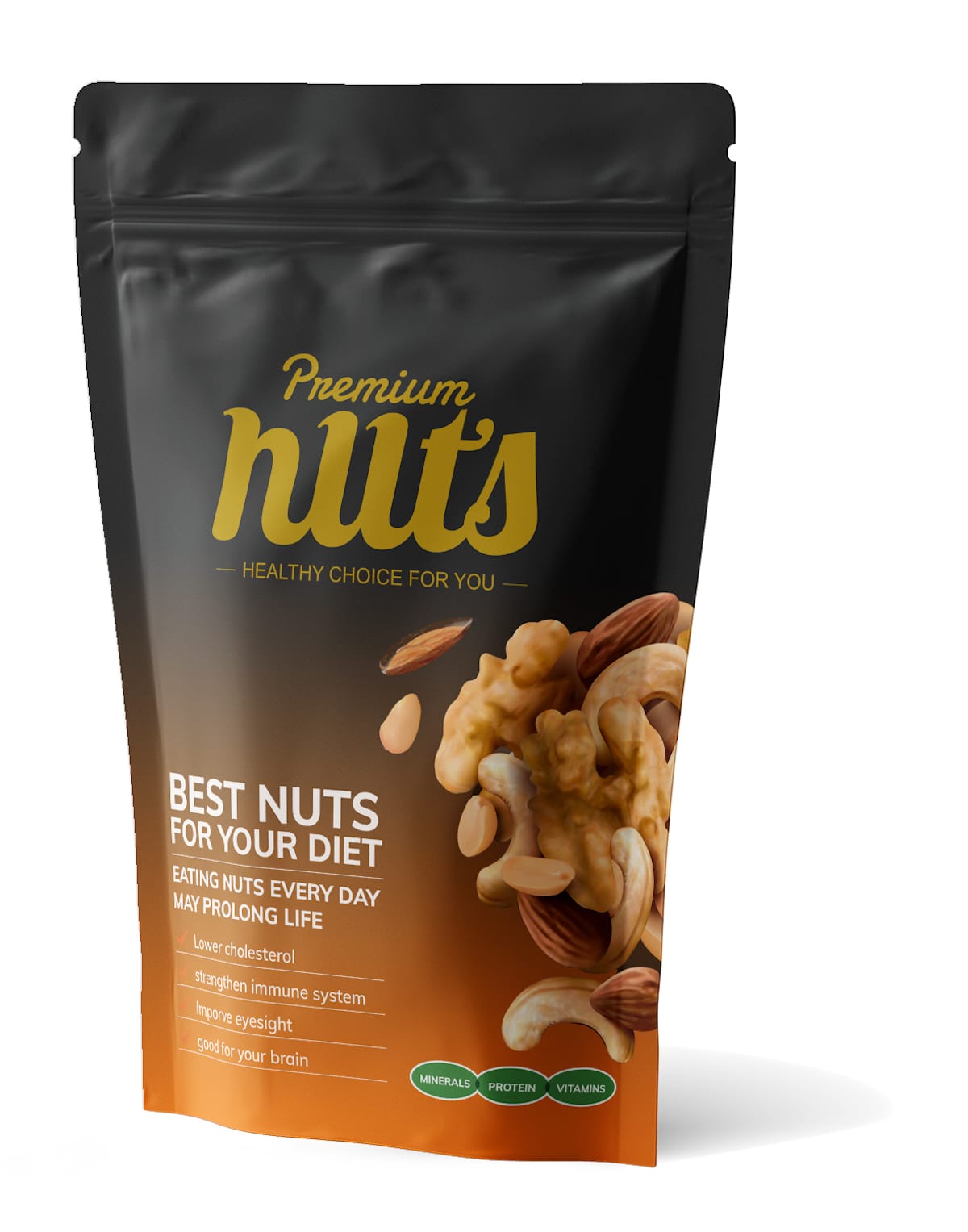
The company’s line of pallet stretch wrap is another example of Favourite Packaging meeting the growing demands of the market in critical ways. The Nano33 Stretch Wrap compiles 33 thin layers which are also tough enough to last. It has excellent structure and tearing resistance similar to the likes of a “plywood effect’. With Nano33, less film is needed to secure a load properly and so the amount of plastic and packaging costs are significantly lowered. “The 33 layers create a lamination of sorts. A standard stretch film might be 20-23 micron thick to wrap a pallet and keep the load safe,” said Yates. “With a Nano33 it can come down to 12 or 15 micron and keep, or exceed, what the 20-23-micron material is doing.” And like the pouches, research has also proven the reduction in environmental impact. “When you do the analysis on how much film is used on each pallet, you can reduce it by 30 per cent in some cases,” said Yates. “Furthermore, if you use the Nano Green, it has 30 per cent recycled content within the material. It’s a combination of less plastic and the plastic there is already recycled material.” It’s in this area where manufacturers and end users could easily reduce plastic consumption, Yates added. “The Nano range is an easy solution for anyone looking at finding a way to reduce their plastic consumption throughout their production,” he said. “If they are using 100 tonnes of plastic on pallets each year, then you can get an easy 30 per cent reduction on that material with this solution. Which will have a big impact. “I expect a lot of enquiries next year around reducing plastic usage from the market.” Yates said the company also anticipates an even greater focus on recyclable plastics throughout 2023. “I think we’ll see a lot of improvement in that area next year,” he said. “In the last 12 months a few things have started happening which will change recycling in Australia, following Europe’s lead.” Yates also said that the timing for the changes was aligning well with emerging technologies. “The good thing is that now that technology and know-how are in place to achieve these goals,” he said. But until then, Yates said the team at Favourite Packaging were aware that each customer will have its own time frame to reach new recyclability goals. Providing traditional packaging alongside cutting-edge recyclable packaging is still important for the wider industry, because no two customers will have the same desires within the same time frames. “It is very important; some customers may be happy to use whatever is cheapest right up until they must change,” said Yates. “Whereas more and more customers want to be out in front of the game. “We have to cater to each customer and where they are in the process and how they want to be perceived through the packaging they use.” |
Australia | Mercados | Envases y etiquetado | Intersectorial | Domingo, 05 Marzo 2023 | |
| Mexico: Record agri-food exports in 2022 | This is the highest figure seen in 30 years, which represents foreign exchange income for the country, the generation of jobs in the primary sector, and better income for producers, without neglecting domestic supply. Imports totaled 44.327 billion USD, with which the country's agri-food trade balance (livestock and agroindustrial products) saw a surplus of 5.806 billion USD in 2022.  According to data from the Agri-food and Fisheries Information Service (SIAP), this is the fifth-largest positive balance in 28 years and the eighth consecutive year. Mexico's global agri-food trade totaled 94.459 billion USD last year, where 53% corresponded to the country's sales to its trading partners. Exports from the livestock and fisheries sector totaled 21.398 billion USD, 7.47% more than in 2021, and imports from the sector reached 21.548 billion USD, according to data from the Bank of Mexico (Banxico). Foreign agro-industrial sales reached 28.735 billion USD, 15.98% higher than the previous year, and agro-industrial imports totaled 22.778 billion USD, according to the Ministry of Agriculture. Meanwhile, 57% of imports were concentrated in four groups: 21% being cereals; 15% seeds and oleaginous fruits; 14% meat products, and 7% dairy products, eggs, and honey, said the federal agency.
February 15, 2023/ Ministry of Agriculture and Rural Development/ Mexico. |
México | Mercados | Intersectorial | Viernes, 03 Marzo 2023 |

Página 2 de 66